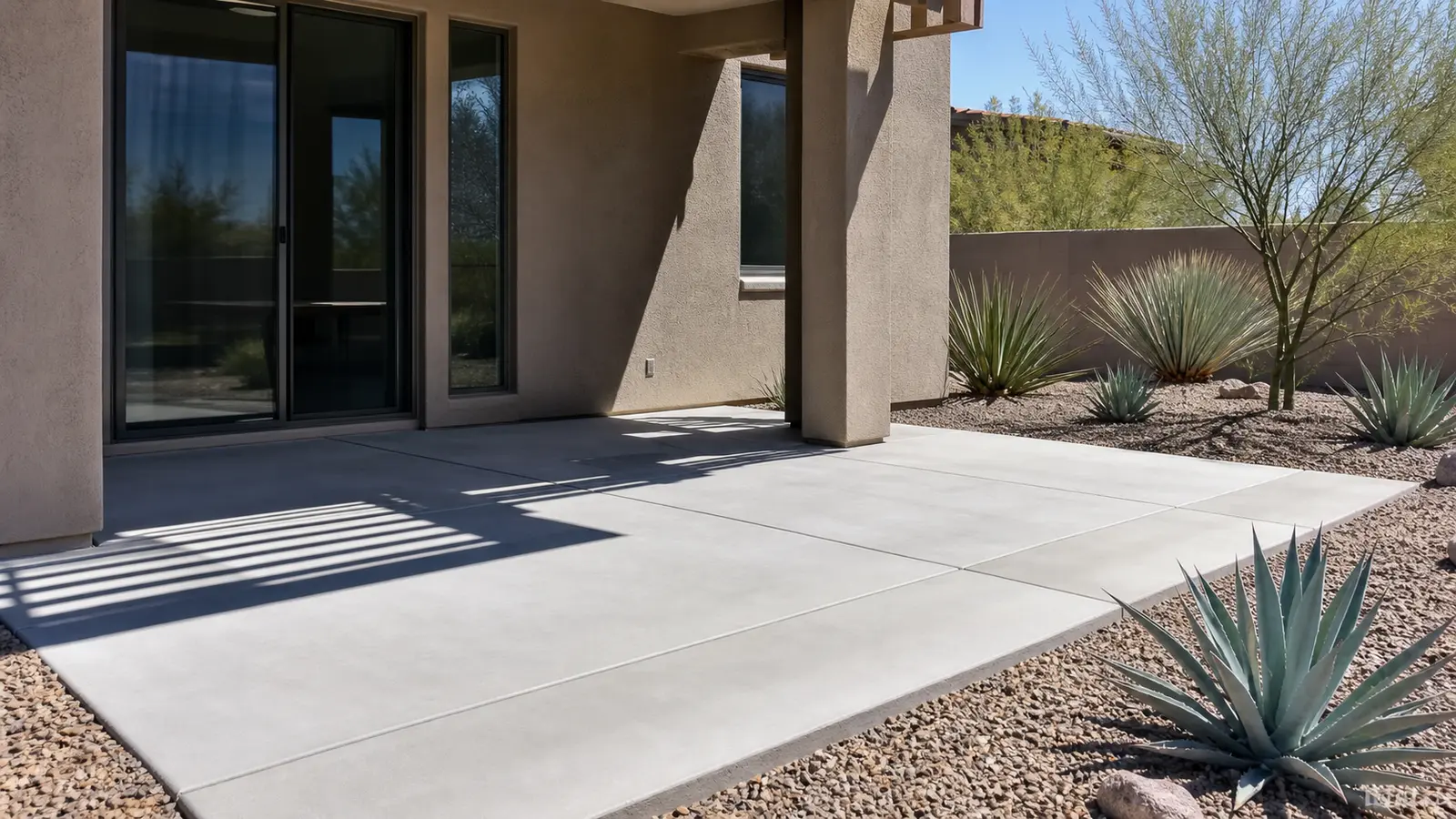
A patio should work after the furniture arrives
Patio dimensions make more sense when they reflect tables, chairs, grills, walking routes, shade structures, and door swings. A narrow strip may technically add hardscape but leave little room to move. The layout should also consider irrigation, landscape edges, posts, utility equipment, and transitions to walkways. Starting with the activities you expect helps establish a practical footprint without requiring a finished design on the first conversation.
Where concrete meets a door or existing slab, elevation matters. The surface should support comfortable movement and direct rain away from vulnerable thresholds and walls. Monsoon runoff can expose low spots quickly, so the plan should acknowledge existing drainage paths rather than treating the patio as an isolated plane.
Match a slab or pad to its intended use
“Slab” can describe very different projects. A shed base, equipment pad, outdoor work area, and general utility slab have distinct dimensions, loading, clearance, and anchoring considerations. Equipment manufacturers or project designers may specify support and access requirements. Those requirements should be available before final details are set, while utility locations and maintenance clearances should remain accessible.
Base preparation follows actual site conditions. Prior excavation, loose fill, irrigation, roots, or disturbed soil can affect the approach. Establishing grade, removing unsuitable material, compacting support, and using an appropriate aggregate base can matter as much as the visible surface. Joint layout should suit slab geometry and help manage shrinkage cracking.
Choose an exterior finish with use in mind
A texture should provide reasonable traction while remaining comfortable for the intended activity. Broom finishes are practical for many exterior surfaces. Decorative color, exposed aggregate, or patterns may add visual interest, but choices should account for hot sunlight, natural variation, maintenance, and transitions to older concrete. Samples are references rather than promises of a perfectly uniform field appearance.
Yuma heat, low humidity, and wind can accelerate moisture loss during placement. Scheduling, delivery sequence, finishing, and curing should respond to conditions on the workday. Curing is part of the scope, not merely something that happens after the finish is complete.
Patio and slab questions
Can a new patio connect to an older slab?
Often, but the connection needs a deliberate joint and compatible elevations. Color and texture differences should be expected because new concrete has not aged with the existing surface.
Can a patio include a decorative finish?
Depending on use and site conditions, several finish options may be considered. Compare traction, heat exposure, variation, care needs, and how borders or joints fit the layout.
What is enough information to begin?
Share whether you are considering a patio, pad, or utility slab, its general use and location, and any obvious doorway or drainage concern. A professional can help refine the rest during site review.
Start a Concrete Project Request or use the contact page for a general question.