1. Share the project
Send the required contact details and a plain-language description.
Concrete planning in Yuma, Arizona
Start with a practical scope for your driveway, patio, slab, walkway, replacement, repair, or decorative finish—and connect with an independent concrete professional who can evaluate the site.
A good pour begins before the truck arrives. Dimensions, access, base conditions, drainage, finish expectations, and curing all belong in the conversation. Tell us what you are planning and what is not working now.
Yuma Concrete Project Help is a project-information website, not the concrete contractor that performs the work. When follow-up coverage is available, your request may be shared with an independent concrete professional. You decide whether to proceed and contract directly with that professional.
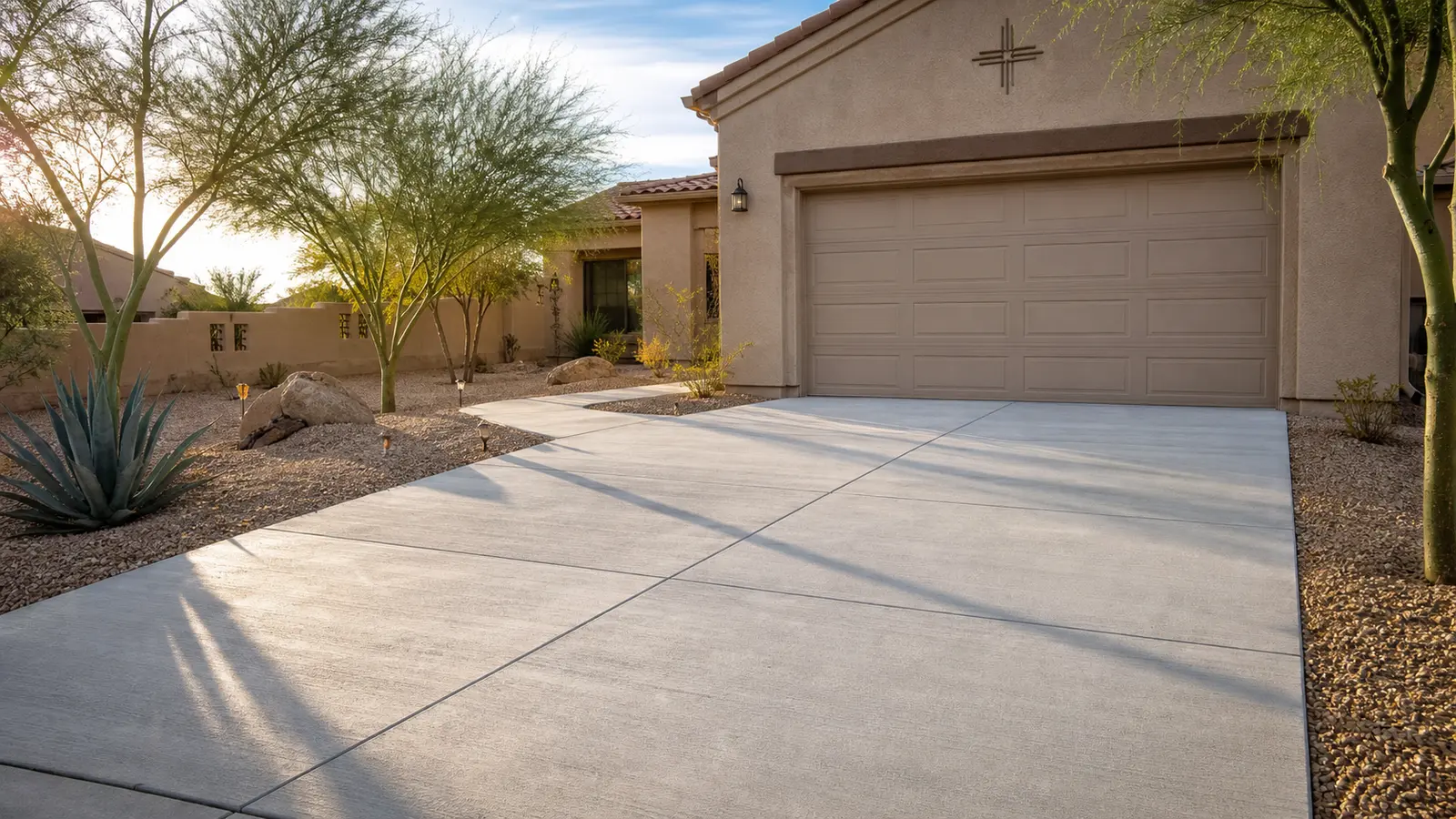 Driveway width, joint layout, drainage, and transitions should be planned around daily vehicle use.
A calmer starting point
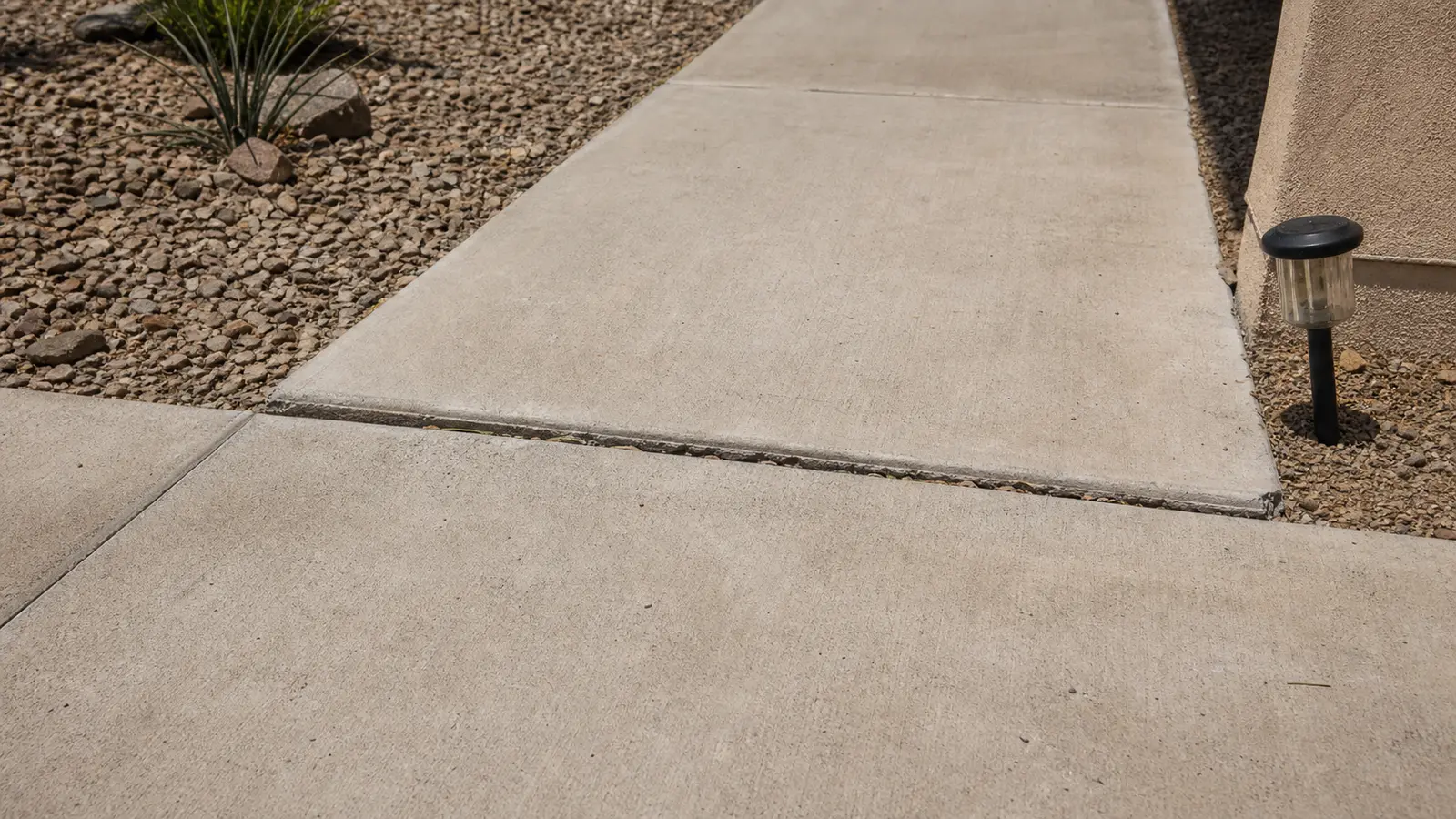
A widening driveway crack, a patio that sends water toward the door, or a walkway edge that catches every shoe can become a daily irritation. You step around it, explain it to guests, and wonder whether a small problem is turning expensive. Concrete has a special talent for making itself part of the family conversation—usually right when everyone is carrying groceries.
Ignoring displacement or poor drainage can raise the stakes: trip exposure, water near the foundation, vehicle wear, and a larger demolition scope later. But urgency should not replace diagnosis. The useful next step is to identify what moved, where water goes, how the surface is used, and whether repair or replacement offers the more durable result.
How this works
Send the required contact details and a plain-language description.
The request is considered for Yuma-area follow-up, subject to availability.
When coverage is available, your request may be shared with an independent concrete professional.
Ask questions, verify credentials and terms, and decide whether to contract directly with that professional.
Core project types
Plan vehicle loads, width, approach transitions, joints, surface texture, and drainage without treating the driveway as a simple rectangle.
Explore driveway planningCreate an outdoor surface sized for furniture and circulation, with thoughtful slope, edges, finish, and transitions to doors or landscaping.
Explore patios and slabsDefine intended use first. A shed pad, equipment pad, and general-purpose slab can have different dimensions, support needs, and utility conflicts.
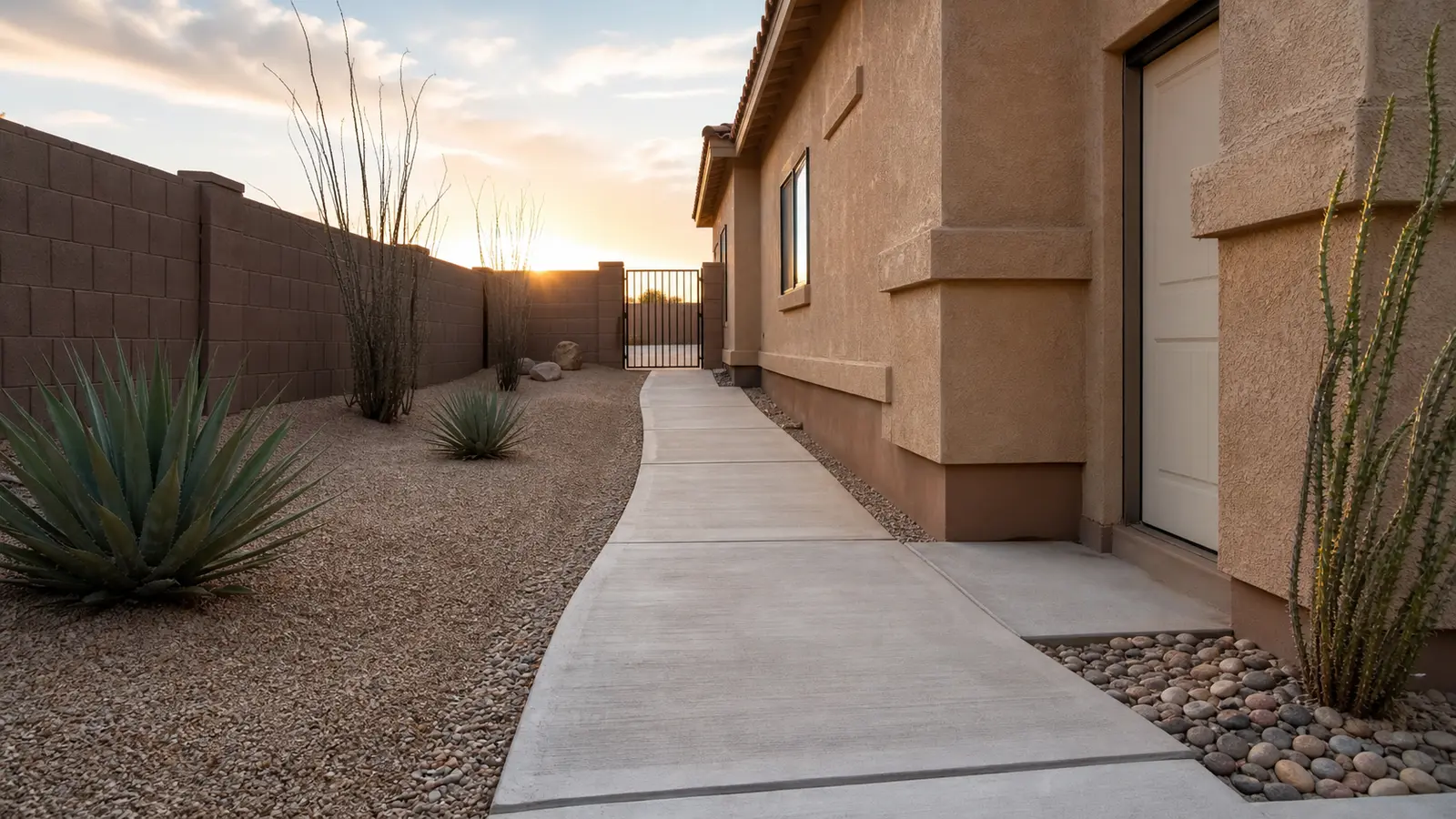
Plan a slab or padImprove the route between gates, entries, side yards, and outdoor spaces while considering comfortable width, steps, slope, and trip points.
Review walkway optionsAssess cracking, settlement, spalling, drainage, and failed sections before choosing a patch, partial removal, or full replacement.
Understand repair decisionsCompare color and texture choices with realistic expectations for hot sun, variation, traction, sealing, and ongoing care.
See finish considerations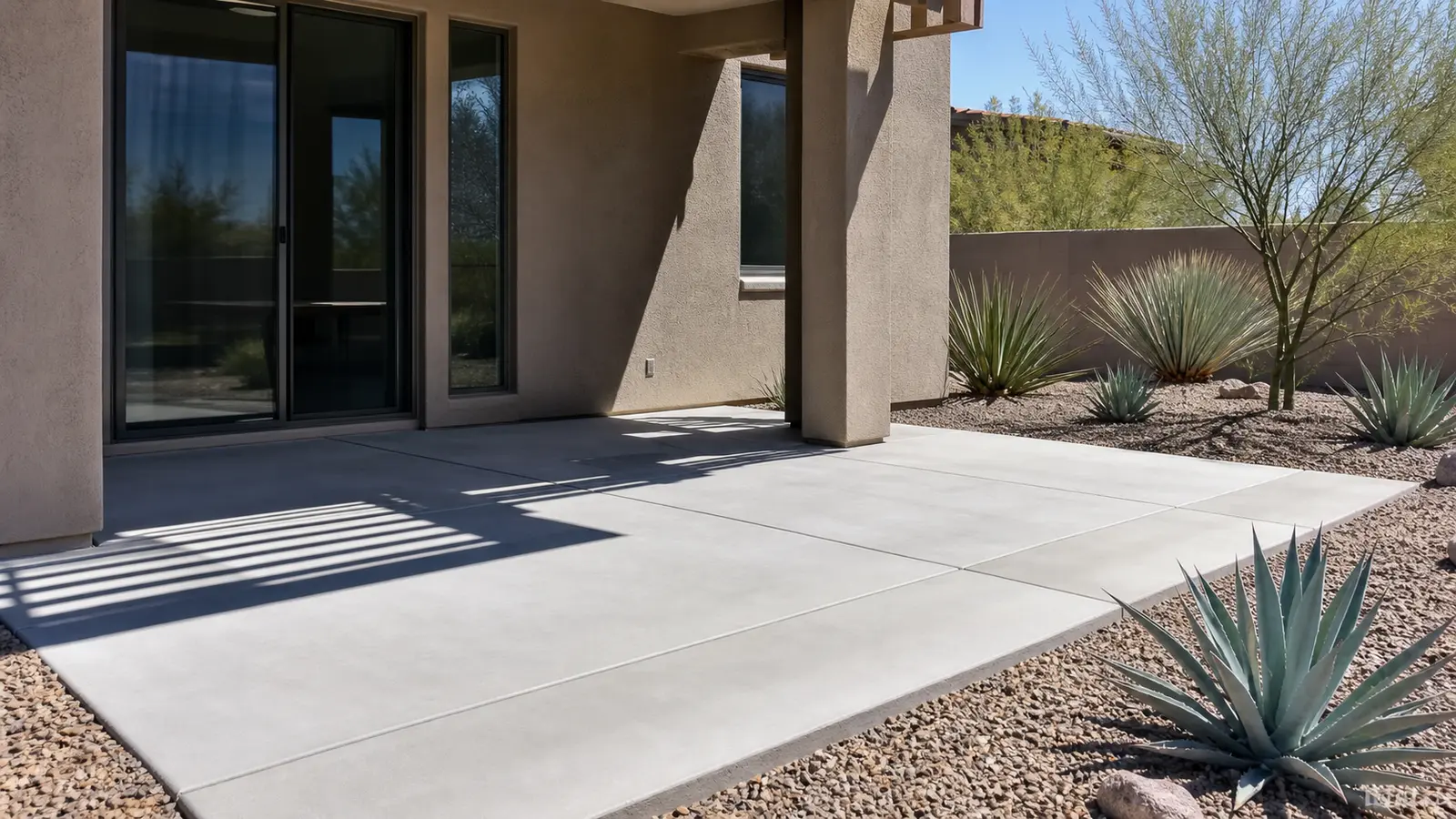 A well-planned patio balances usable space, shade, drainage, and comfortable transitions to the home.
Desert-specific planning
Yuma heat can shorten working time. Low humidity and wind can pull moisture from exposed concrete quickly, increasing the need for deliberate placement, finishing, and curing choices. Conditions at the pour—not a generic calendar—should guide the plan.
Long dry stretches do not make drainage optional. Intense monsoon rain can reveal every low point. Finished elevations and slopes should carry runoff away from doors and structures while respecting existing drainage paths.
Soil and fill conditions can vary from one property, or one part of a property, to another. Removing unsuitable material, compacting a suitable base, and accounting for disturbed areas can matter as much as the visible finish.
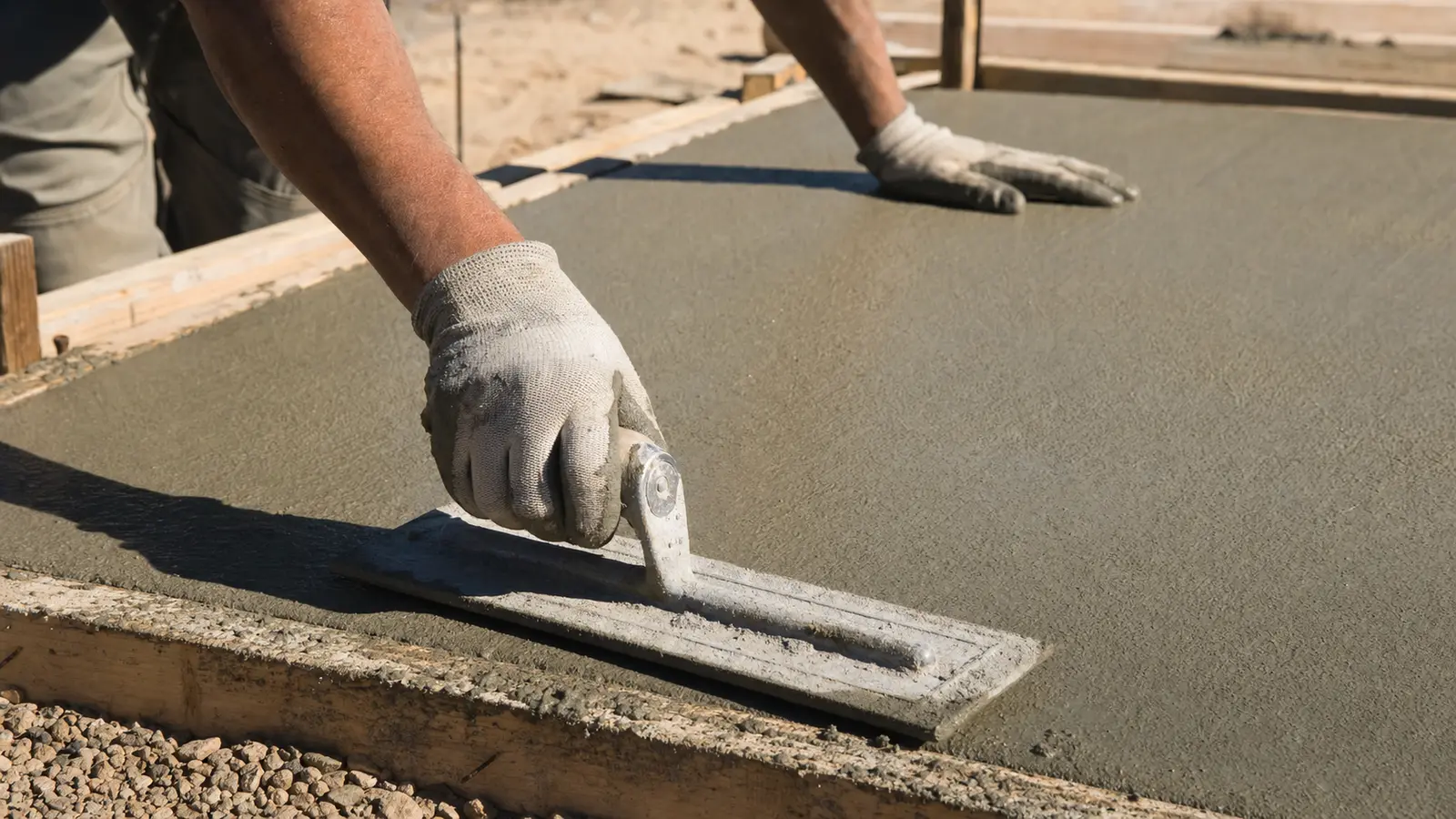
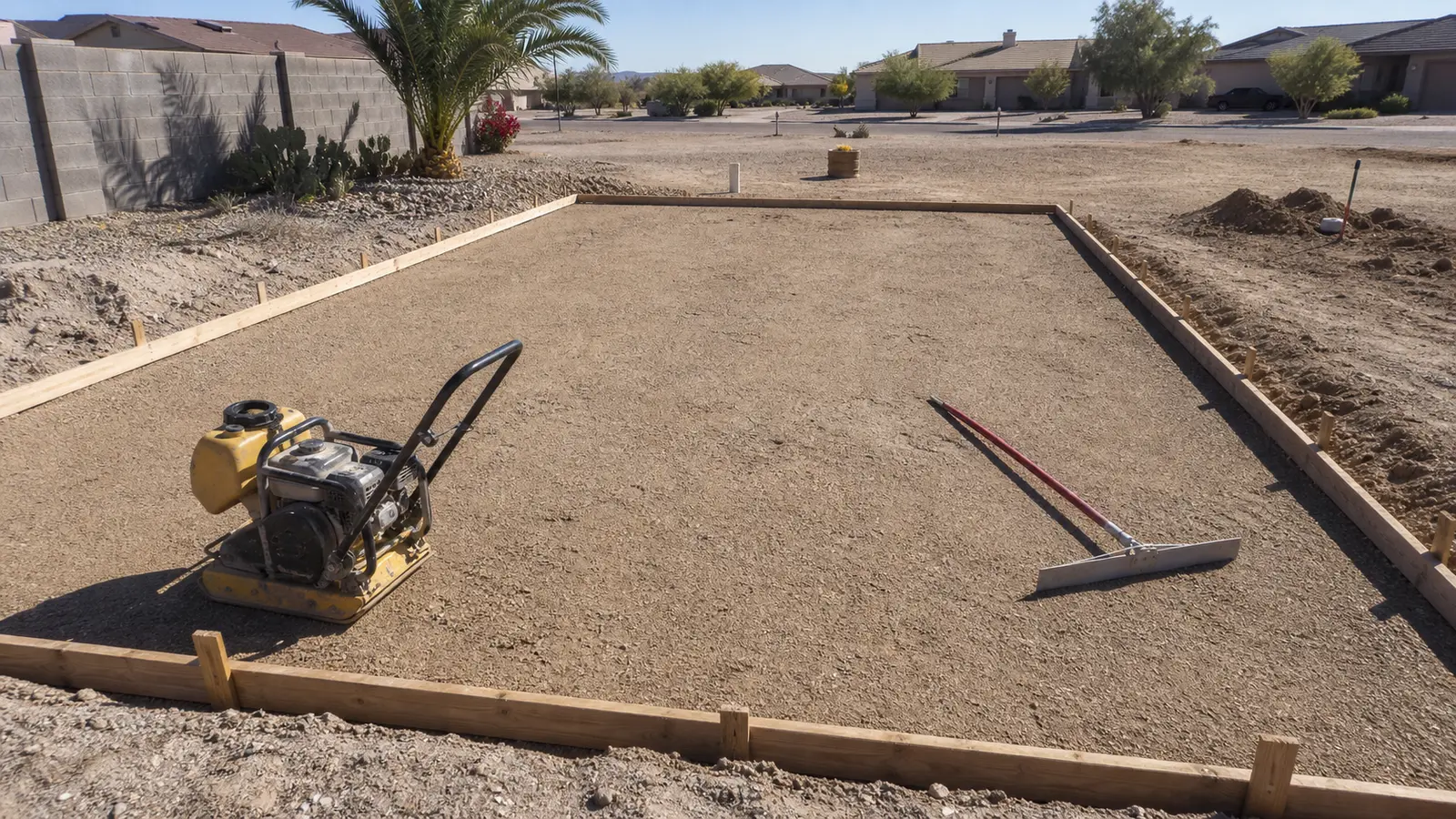
Base preparation and compaction happen below the finished surface, but they strongly influence long-term performance.
Scope before price
A total without a scope can hide important differences. Ask each professional to describe the approximate square footage, thickness, demolition and disposal, base preparation, reinforcement approach, joints, edges, finish, curing plan, access assumptions, and exclusions. Permitting or utility requirements should also be clarified when applicable.
Price can change with limited equipment access, hand excavation, removal depth, steps, drainage corrections, pump needs, finish complexity, or uncertain subsurface conditions. That does not make the estimate unhelpful; it makes written assumptions essential.
From uncertainty to a finished surface
Explain the intended use, rough dimensions, current damage, access limits, and preferred finish. Mention drainage concerns or timing constraints up front.
An independent concrete professional can examine grades, base conditions, removal needs, transitions, and practical access before defining the work.
Review materials, preparation, finish, schedule assumptions, cleanup, payment terms, and responsibilities before authorizing work.
Frequently asked questions
High temperatures, low humidity, and wind can accelerate moisture loss and reduce working time. A concrete professional may adjust scheduling, placement, finishing, and curing methods for the conditions on the day of the pour.
It depends on the cause and extent of the damage. Localized surface defects may be repair candidates, while moving, badly displaced, or broadly deteriorated concrete may call for partial or complete replacement. An on-site assessment is the soundest way to decide.
The plan should consider finished elevations, slope, runoff direction, nearby walls, doors, and existing drainage paths. Concrete should not create a new route for water toward the house or an adjoining property.
Important variables include dimensions, thickness, access, demolition, hauling, base preparation, reinforcement, drainage details, finish complexity, edges, steps, and site conditions. A written scope makes estimates easier to compare.
Yes. Depending on the use and project, options may include broom textures, integral color, exposed aggregate, or stamped patterns. Ask about sample variation, slip resistance, maintenance, and how the finish performs in direct sun.
Ready for a useful conversation?