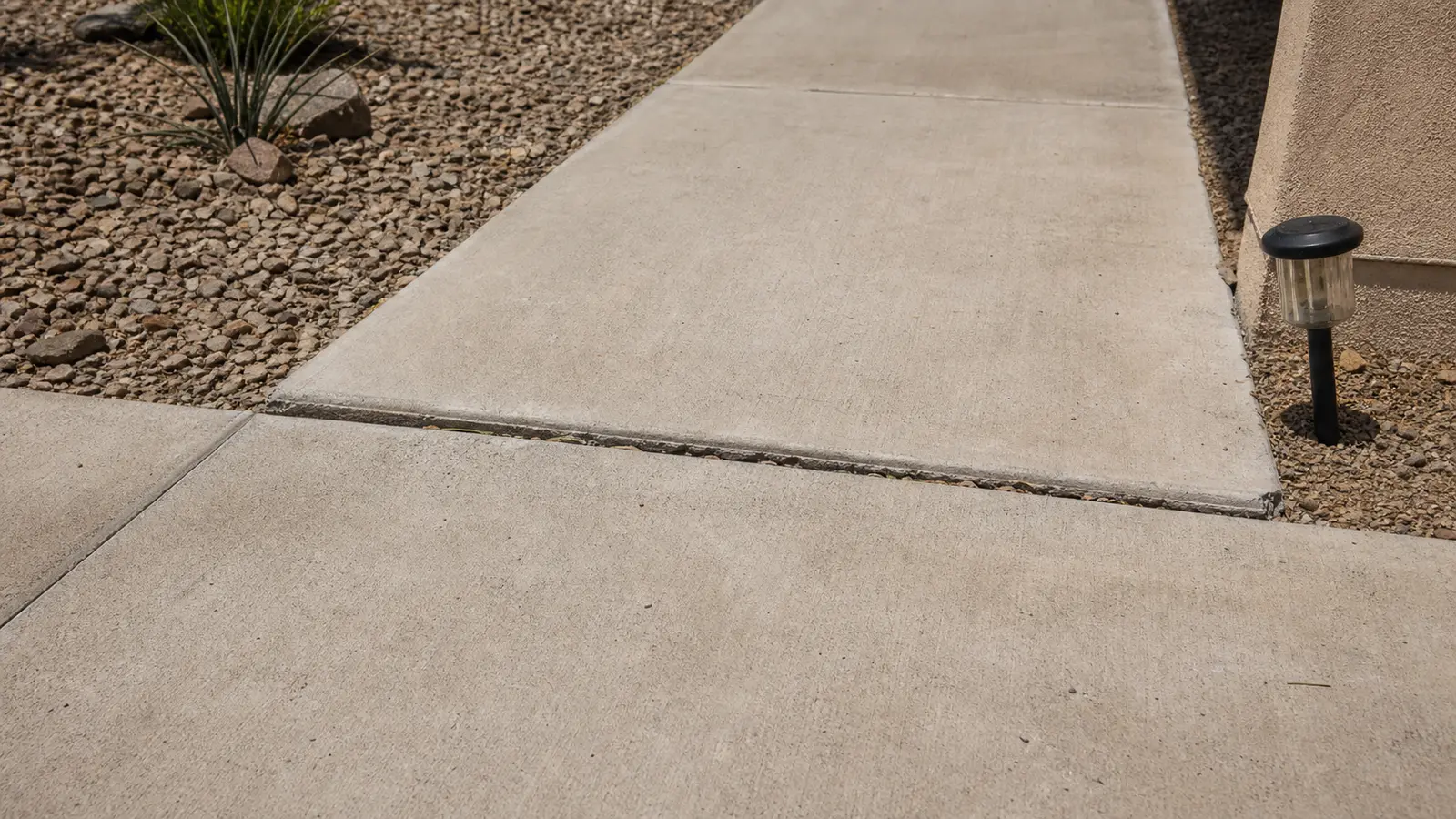
The shape of damage tells only part of the story
A narrow, stable crack is different from a section with vertical displacement. Broken corners, flaking surfaces, exposed aggregate, staining, and recurring ponding point toward different questions. The location matters too: damage near a downspout, irrigated bed, tree, utility trench, heavy traffic route, or slab edge may reveal influences that a surface patch cannot address.
A useful assessment considers whether movement is active, whether the area creates an awkward walking transition, and where water travels. Yuma’s dry climate does not remove water from the equation. Irrigation leaks and concentrated monsoon runoff can affect support beneath concrete or expose drainage defects around it.
Repair and replacement solve different problems
Localized surface defects may be candidates for a compatible repair when the surrounding concrete remains sound and stable. Crack treatments can reduce debris or water entry in certain situations, yet they do not erase the crack or correct unsupported, moving concrete. Edge repairs depend on sound material to bond to and protection from the forces that caused the break.
Partial or complete replacement may be more appropriate when sections are badly displaced, broadly deteriorated, poorly sloped, or no longer supported. Replacement creates an opportunity to correct base preparation, elevations, joints, and drainage, but it also introduces demolition, disposal, access, and transition details. New concrete will usually look different beside an older weathered surface.
Set realistic expectations for the visible result
A repair can remain visible because color, texture, aggregate, age, and sun exposure vary. Honest planning distinguishes functional goals—such as removing a loose edge or improving a transition—from a desire for a uniform appearance. In some settings, a defined panel replacement or deliberate joint looks more coherent than a small patch that attempts to disappear.
The written scope should identify the treatment area, preparation, materials, finish, curing, cleanup, and known exclusions. If the source of movement is uncertain, that uncertainty should be discussed before work begins. Conditions beneath an existing slab are not always fully visible until removal.
Concrete repair questions
Can every crack be filled?
A crack may accept a treatment, but filling it is not always the right objective. Width, depth, movement, contamination, water exposure, and the desired outcome determine whether a treatment is useful.
Will repaired concrete match the old surface?
An exact visual match is unlikely. Existing concrete has aged and weathered, while repair materials have their own color and texture. The difference may soften over time but should be expected.
How do I start without diagnosing it myself?
Describe where the damage is, how the area is used, and whether you notice a raised edge or drainage issue. That is enough for an initial conversation; site review can guide the diagnosis.
Start a Concrete Project Request or ask a general repair question.