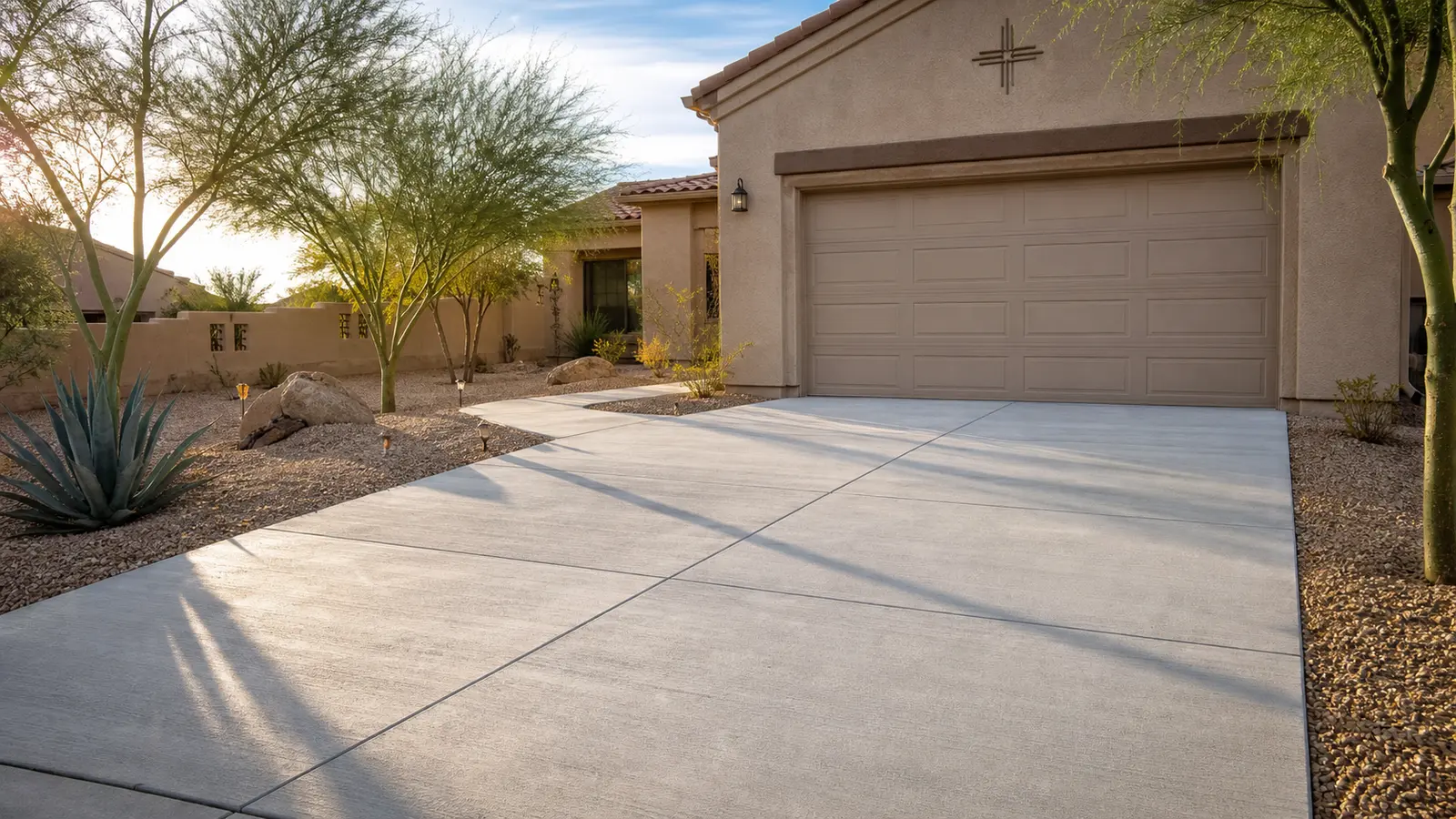
Begin with the route a vehicle actually takes
A useful layout accounts for gate width, garage position, street approach, turning movement, parking habits, and nearby walls or landscaping. The connection to a curb, alley, garage slab, or older paving deserves special attention. An uncomfortable ridge can affect clearance, while a low transition may collect runoff. Approximate length and width are enough to begin a conversation; final boundaries and elevations should follow a site review.
Replacement work also needs a defined removal plan. Existing concrete thickness, access for equipment, disposal, and protection of adjacent surfaces can shape the scope. If only one panel has failed, the cause matters before deciding whether a partial replacement makes sense.
Support, joints, and loads work together
The visible finish is only one part of driveway performance. Preparation may include removing soft or disturbed material, establishing grade, compacting the subgrade, and placing a suitable aggregate base. Vehicle type and use can influence slab details. A passenger-car driveway and an area regularly used by heavier vehicles should not be treated as identical without evaluation.
Concrete shrinks as it cures, so control joints provide planned locations for cracking. Joint layout should respond to panel proportions, corners, curves, and transitions. Reinforcement can serve a specific design purpose or help keep cracked sections together, but it does not substitute for consistent support, appropriate joints, or careful curing.
Plan drainage for dry months and monsoon rain
Yuma’s long dry periods can make a low spot easy to overlook until intense rain arrives. Finished elevations should guide runoff away from garage openings, walls, and entries without sending it onto a neighboring property. Roof discharge, irrigation, existing swales, and the street connection all belong in the drainage conversation.
Exterior texture should support tire and foot traction. A broom finish is common, while color or decorative borders may be considered where they suit the property. Direct sun, surface variation, maintenance, and the challenge of matching older concrete should be discussed before selecting a finish.
Driveway questions
Can a driveway be widened beside existing concrete?
It may be practical, but the new section needs its own support, drainage, joint, and transition plan. New concrete will usually differ in color and texture from an aged slab.
Does a cracked driveway always need replacement?
No. The decision depends on crack pattern, displacement, ongoing movement, drainage, and overall deterioration. A site assessment can separate localized repair candidates from sections where replacement is more sensible.
What should I share first?
Describe the general location, whether the project is new or replacement work, intended vehicle use, and any access or drainage concern. That is enough to start; detailed field decisions can come later.
Use the project request page for a straightforward project conversation, or contact us with a general question.